 Simpleswap
Simpleswap fixed rates protect a quoted receiving amount when the deposit meets the deadline
Simpleswap fixed rates lock a quoted exchange rate for 20 minutes if the deposit arrives and gains at least one blockchain confirmation within that window. Sending before expiry alone does not satisfy that confirmation requirement. A late deposit can preserve an unchanged rate or lead to a new quote or refund.
Bottom line: A deposit transaction hash alone does not establish that the first confirmation arrived within the fixed-rate window.
The 20-minute window includes the first deposit confirmation
A fixed quote gives the receiving amount conditional price protection while the deposit reaches the service. The countdown belongs to the exchange, so approving a transfer in a wallet does not establish timely funding. The deposit also needs at least one blockchain confirmation before the window closes. A transfer still pending near the deadline may miss the confirmation requirement. Check the order’s deadline alongside the sending wallet’s transfer conditions. A wallet estimate cannot promise when the network will include the transaction.
Fixed and floating quotes handle price changes differently
Fixed mode suits a swap whose receiving amount matters, provided the deposit can meet the funding conditions. It holds the valid quoted amount through routine price changes. Favorable price movement does not increase the locked payout. Floating mode calculates the final amount when the swap processes, so the initial figure remains an estimate. Market movement and available liquidity can increase or reduce the output. It offers greater funding flexibility without a strict funding deadline or upper amount limit, although a minimum deposit and other processing conditions still apply.
Compare both modes using the same deposit amount and matching asset and network selections. A larger estimate is useful only if its uncertainty fits the intended use. When a specific receiving quantity is necessary, consider whether timely funding is realistic before treating the fixed quote as the better fit.
Receiving-side fees and the cost of funding the swap
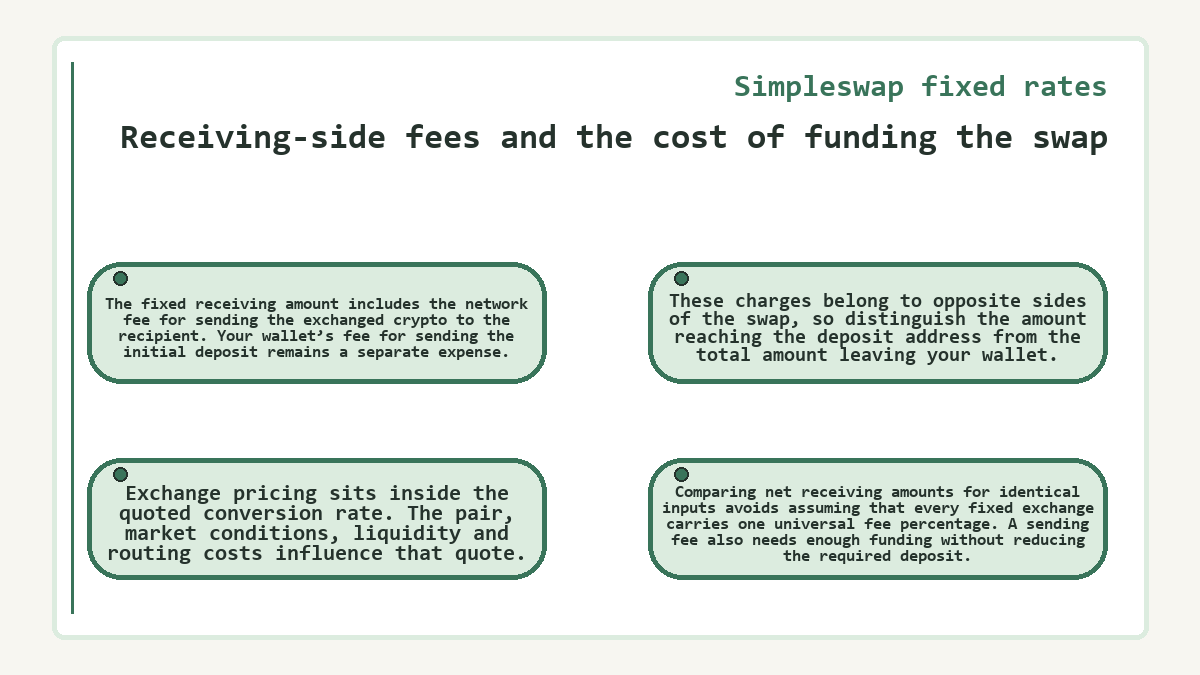
The fixed receiving amount includes the network fee for sending the exchanged crypto to the recipient. Your wallet’s fee for sending the initial deposit remains a separate expense. These charges belong to opposite sides of the swap, so distinguish the amount reaching the deposit address from the total amount leaving your wallet. Exchange pricing sits inside the quoted conversion rate. The pair, market conditions, liquidity and routing costs influence that quote. Comparing net receiving amounts for identical inputs avoids assuming that every fixed exchange carries one universal fee percentage. A sending fee also needs enough funding without reducing the required deposit.
The deposit amount and network bind the quote
The quoted output relates to the selected deposit, asset and network, with limits specific to that exchange. Fixed-rate eligibility must cover the chosen combination; an asset listing alone does not establish an available quote.
Amount limits and the intended deposit
Check the minimum and any maximum that apply to the fixed-rate selection. The API distinguishes fixed and floating ranges, so a range obtained for floating mode does not establish fixed-rate eligibility. Use the selected mode’s actual limits rather than a remembered threshold from another exchange.
Sending a different amount changes the inputs underlying the quoted output. An insufficient or excessive deposit may prevent the original order from proceeding. A below-minimum deposit may also be ineligible for a refund. Keep the intended deposit separate from any fee that the sending wallet charges. Read a transfer screen’s total debit alongside the amount that reaches the deposit address.
The network and required identifiers
The funding instructions specify the deposit asset and blockchain network. Include any mandatory memo or tag that the order requires. A timely transfer on the wrong network does not satisfy those instructions. Rate protection cannot compensate for a deposit that the service cannot correctly identify or process.
From an eligible quote to a confirmed payout
A completed exchange has a funded deposit, a processed conversion and an outgoing transfer to the receiving wallet. Before committing funds, establish that the selected mode is available and the deposit can meet its conditions. If timely confirmation remains doubtful, compare floating mode using the same receiving-amount criterion.
| Exchange stage | Amount and transaction record | Access to the funds |
|---|---|---|
| Quote before funding | A fixed quote protects the shown output conditionally; a floating quote estimates it. | The deposit stays in the sending wallet until transfer. |
| Deposit and conversion | The deposit record shows arrival and confirmations. Fixed protection needs timely funding; floating output follows processing. | After deposit, the service and its providers control swap processing. |
| Payout and receipt | Check the payout and wallet credit against the valid fixed quote or final floating amount. | Access after delivery depends on the receiving wallet or account. |
| For either mode, a quoted amount and a pending deposit do not establish receipt of the exchanged asset. | ||
Keep the Exchange ID with the quote and deposit transaction hash. When the order reaches Finished, inspect the payout transaction on its network and the receiving wallet’s credit. The deposit transaction proves funding activity; the separate payout record concerns delivery. Resolve any discrepancy before using the expected output as an available balance.
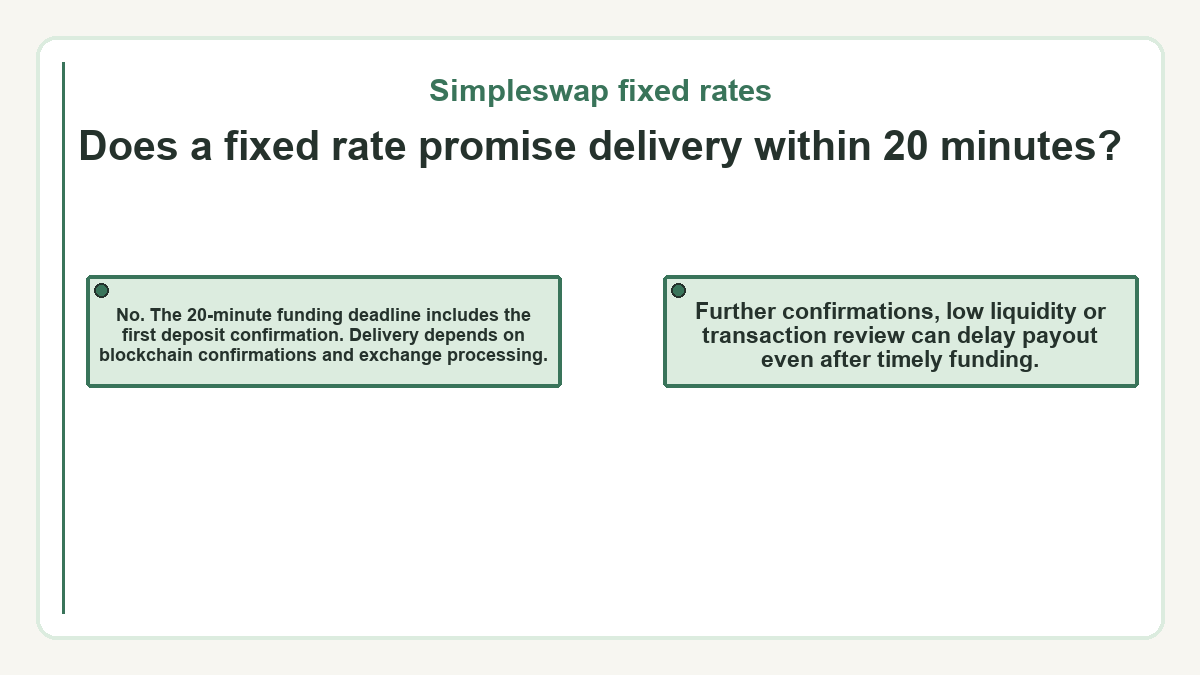
Does a fixed rate promise delivery within 20 minutes?
No. The 20-minute funding deadline includes the first deposit confirmation. Delivery depends on blockchain confirmations and exchange processing. Further confirmations, low liquidity or transaction review can delay payout even after timely funding.
Late deposits can preserve or lose the original quote
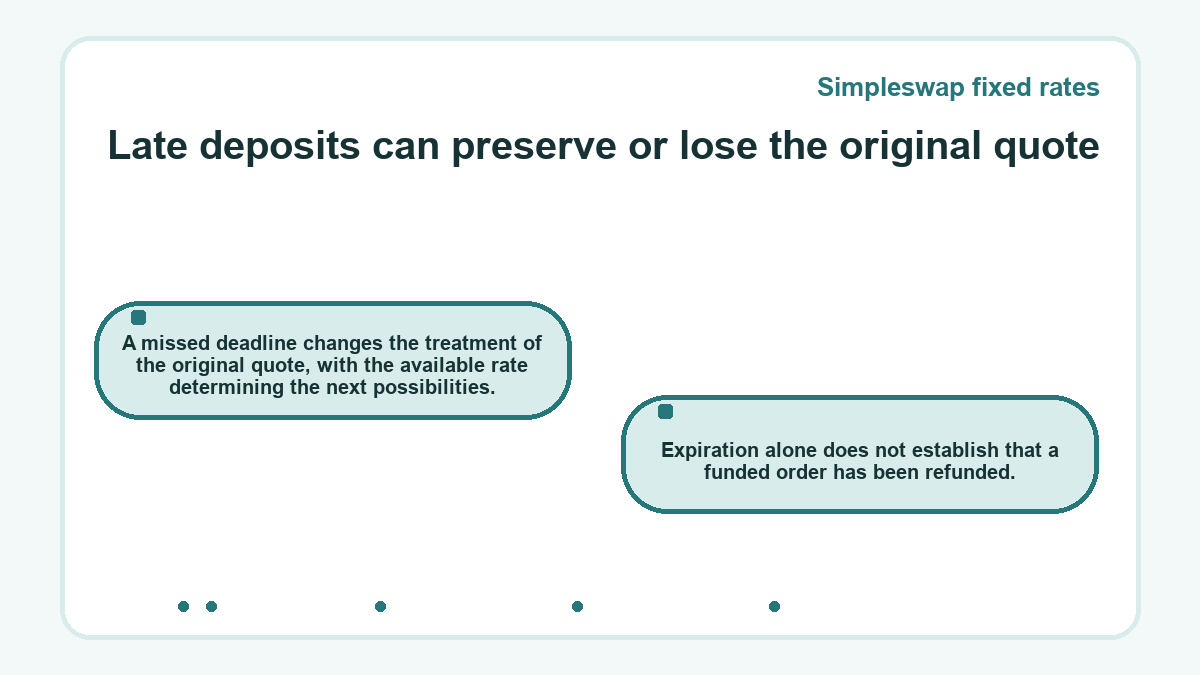
A missed deadline changes the treatment of the original quote, with the available rate determining the next possibilities. Expiration alone does not establish that a funded order has been refunded.
The rate has not changed
A late deposit can still proceed at the original fixed rate if that rate remains unchanged. This exception does not extend the quoted window. Ask support which rate applies to the late deposit before relying on the original receiving amount.
The rate has changed
If the deposit arrives late and the rate has changed, the exchange may fail. A refund or completion at a new fixed rate may be offered. The receiving amount from the original quote cannot establish the amount for that revised exchange.
Compare the replacement receiving amount with the quantity that you actually need. If the offer no longer meets that purpose, discuss the available refund option. Confirm the chosen outcome for the existing deposit before treating the matter as resolved.
Market disruption and verification can interrupt a funded order
Fixed-rate timing protection remains subject to service conditions, including exceptional market disruption and transaction review. The service can refuse execution during significant market changes or disruption. After a refusal, the service may return the funds, execute at a newly indicated rate or follow another instruction that you and the service agree on.
A transaction selected for review may require identity verification or evidence about the funds. That can apply even when the exchange began without an account. If the status becomes Verifying, contact support about that order. The missing information and any external provider involvement affect how the case progresses.
Use the service’s support channels for order details and documents, keeping sensitive information out of unsolicited conversations. Establish the status of a paused deposit before committing funds to another swap.
Before you start with Simpleswap fixed rates
Can I switch a fixed-rate order to floating mode after it reaches confirming?
Order changes are unavailable while the exchange is confirming, exchanging or sending the payout. A submitted deposit therefore does not provide a dependable opportunity to switch rate modes. The possibility of changes at other stages is limited; ask support about the specific order before assuming that a switch can proceed.
Why is the fixed-rate option unavailable for my selected pair?
Fixed-rate availability depends on the selected pair, liquidity and market conditions. A pair available in floating mode does not establish an available fixed offer. Check the exchange flow for the exact asset, network and amount combination. When availability remains unclear, support can clarify which rate options are possible.
How can a queued exchange withdrawal affect the fixed-rate deadline?
A withdrawal waiting inside the sending platform does not establish that the deposit reached the blockchain. The fixed-rate window continues while the transfer waits. Use the actual deposit transaction and its confirmation record to assess arrival, rather than the time that you submitted the withdrawal request.
Will a refund after a failed fixed-rate exchange return the entire deposit?
A refund can be smaller than the original deposit because applicable network fees may be deducted. Some fund-recovery cases can involve additional charges. The original quoted receiving amount describes the intended swap output, not the refundable balance. Clarify the refund amount and applicable deductions before choosing that outcome.
Does the API use the same setting for fixed and floating quotes?
The API distinguishes rate modes through the fixed parameter: true requests fixed mode and false requests floating mode. Pair availability, estimates and range checks need the intended selection. A floating estimate or amount range does not establish the receiving amount or eligibility of a separate fixed-rate request.